
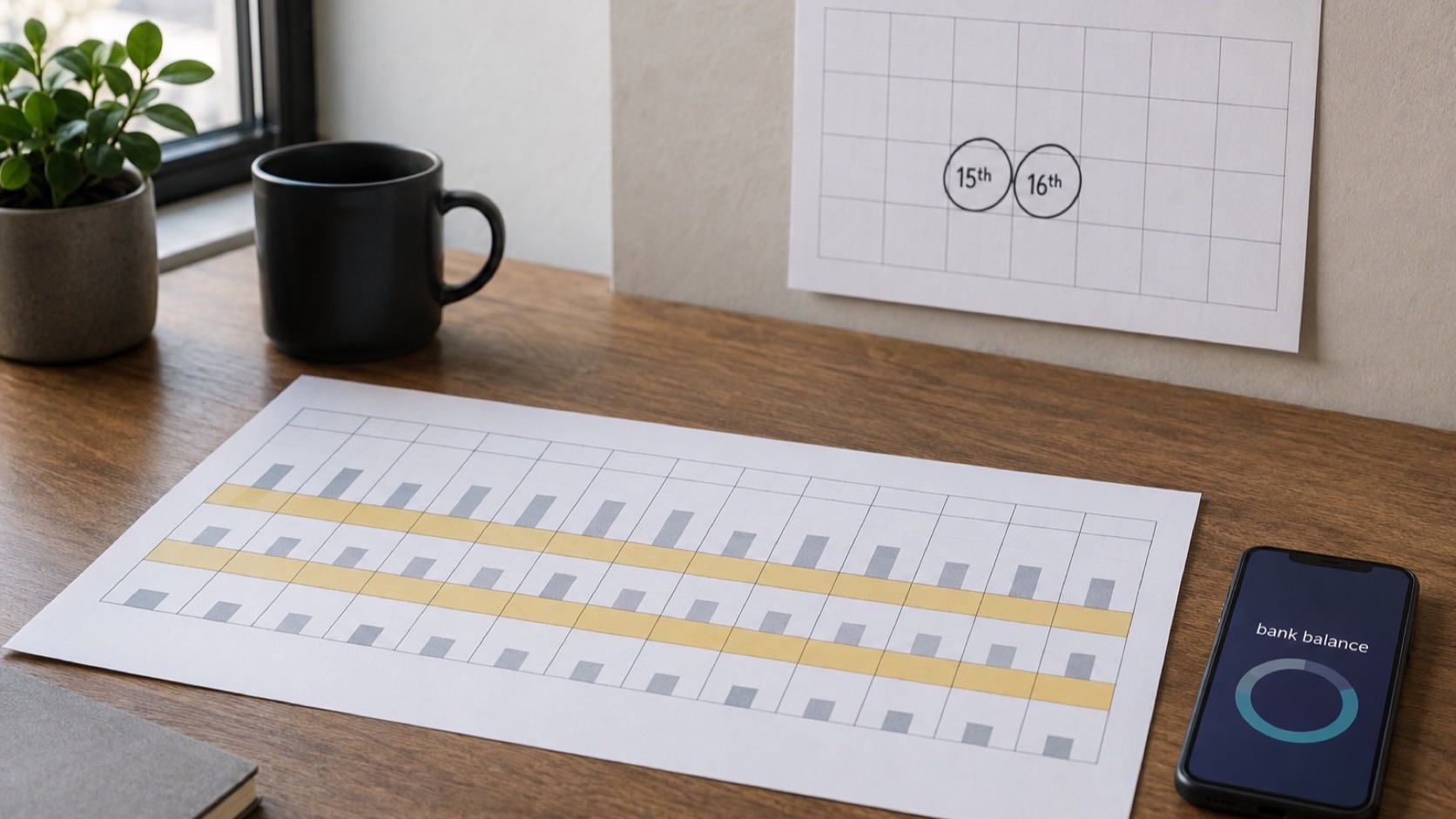
You made money last quarter. The bank balance says otherwise. Between now and Thanksgiving, three things ask for the same cash: deposits on Q4 inventory, the third estimated tax payment on September 15, and interest on whatever line funds the gap between them. This September, all three are moving at once.
The Fed held its rate at 3.50% to 3.75% on July 29 with three members voting to raise it. July inflation printed 3.7% on August 26. The next decision comes September 16, and while a hold is the more likely outcome, a hike is live enough that prime is not getting cheaper before your Q4 draw. Amazon's inbound cutoffs for Prime Big Deal Days fall on September 2, 9, and 16, which means inventory you ship this week sits at Amazon for roughly six weeks before it converts to cash. Meta's average ad price rose 12% in the second quarter, so the same holiday plan costs more to run.
The direct answer: build a 13-week cash forecast this week, by week, with the three lines your profit and loss statement never shows you, and run it before September 16 rather than after. If it already exists, rebuild it with September's numbers.
Why the profit and loss statement lies to you in Q4
Profit counts revenue when the order ships and the cost when the unit sells. Cash leaves when the supplier wants a deposit, often 30% at order, 50% at shipment, and 20% on arrival, then sits in a container, then sits at a warehouse, then sits in Amazon's balance for two weeks after the sale. Ad spend is paid on the card this month for orders that land next month. A brand can show a record quarter while drawing its line to make payroll.
That is the cash flow trap we wrote about in March. What changed since then is the price of being wrong: every week of delay costs interest at prime or above, and a hike on September 16 raises it on every dollar drawn.
What goes in the 13 weeks
One column per week from now through the first week of December. Start with the actual bank balance, not the book balance. Then:
- Receipts by channel, on the day the money arrives. Shopify payouts a few days after the sale; Amazon payouts on its schedule, net of reserves and fees; wholesale on the retailer's terms, net of the deductions you now know to expect. Use last year's Q4 weekly pattern, not a straight line.
- Purchase orders by deposit date. Every open PO with its deposit, balance, and arrival dates, plus the duty and freight due at entry at the post-July 24 rates.
- Advertising at this year's prices. Last year's weekly spend plus the cost inflation you are actually seeing.
- Payroll, rent, software, and the other fixed lines.
- Debt service at today's rate and at a quarter point higher. Interest and any principal, on the dates the lender pulls them.
- Taxes on their dates. September 15 for the third federal estimate, the state estimates that go with it, and January 15 for the fourth. The IRS is charging 7% on shortfalls through December, so a missed estimate is a loan, and it belongs in the forecast as one.
The last line is ending cash against your operating minimum, including any balance the lender requires.
Run it three ways before September 16
A rate hike is the smallest of the three risks. A quarter point on a $2 million line is about $5,000 a year. The forecasts that break are broken by timing. Run the sheet as built, then twice more:
- Receipts slip two weeks, because Amazon holds a reserve or a retailer pays late.
- Inventory converts a week late, because a container missed the September 16 cutoff.
- Rates rise a quarter point and ad costs run 12% over plan.
If any of the three drives ending cash below the minimum in any week, that is the decision to make now, while the options are still cheap: a smaller PO, a later deposit negotiated with the supplier, a bridge line arranged before it is needed, a tariff refund claim collected or sold, or a September estimate computed on actual year-to-date income instead of the standard schedule. Your preparer can run that last one in a day.
What to pull this week
- the bank balance and the current line balance and rate;
- every open purchase order with deposit and balance dates;
- last year's weekly receipts by channel for September through December;
- the ad plan by week, with September's actual cost per order;
- the debt agreement, for covenants and the exact payment dates;
- the 2025 return's total tax and the estimates paid so far this year.
Where your facts change the answer
A made-to-order brand carries far less of this risk than a stocked one. A brand that sells mostly wholesale lives on retailer terms rather than marketplace payouts. A lender's covenant on minimum cash can turn a survivable week into a default. A forecast is only as good as the supplier's real deposit dates, which is why it is rebuilt weekly.
If your finance team has never handed you a 13-week forecast, or hands you one that has not been rebuilt since the summer, that is what a fractional CFO engagement produces first, because every other Q4 decision depends on it.
Is this costing your business money?
Our fractional CFO team works with 7–9 figure brands every day — and the first consultation is free.