
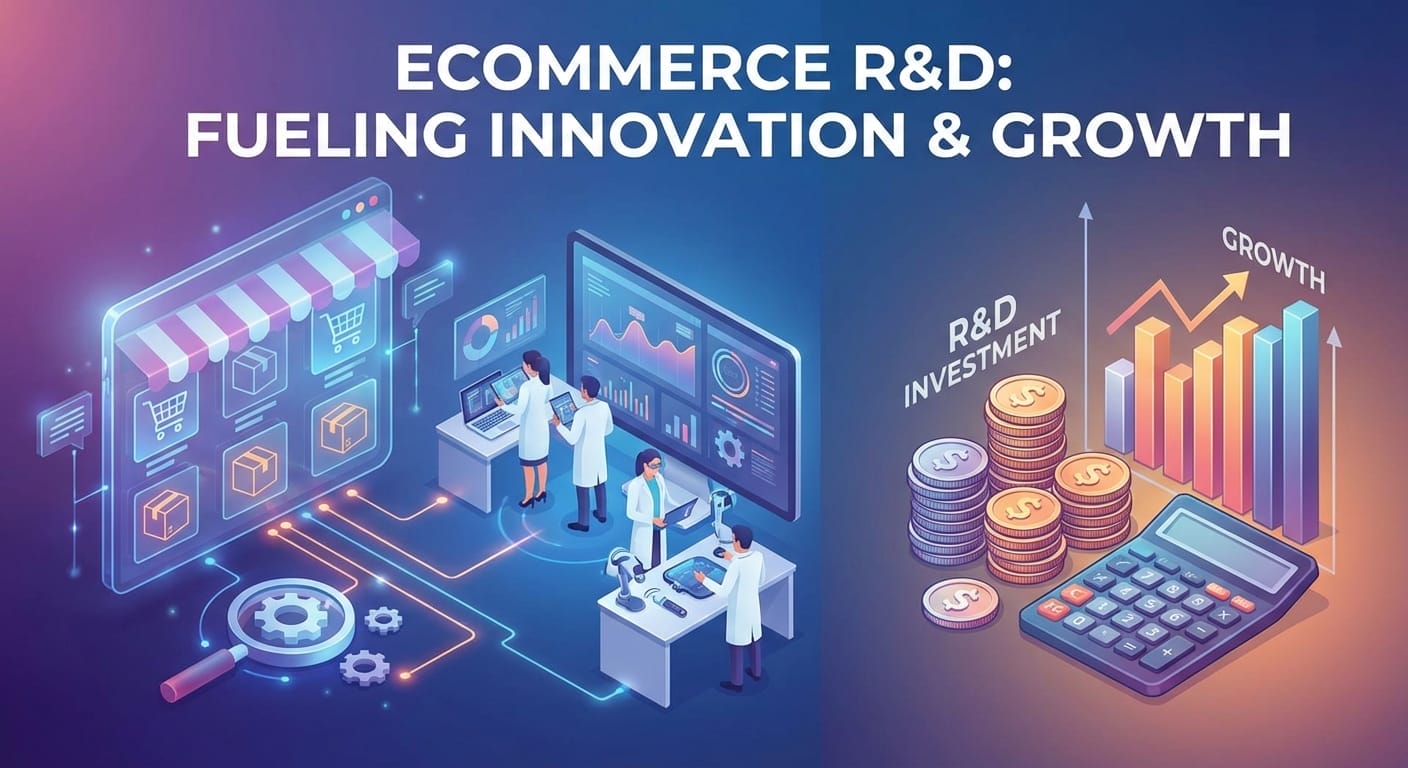
R&D Expenses Under IRC Section 174: 2025 Rules Restore Immediate Expensing
Good news for ecommerce businesses investing in product development and software: the One Big Beautiful Bill Act (OBBB), signed into law on July 4, 2025, restored immediate expensing for domestic R&D costs. Here’s what you need to know about the new rules.
What Qualifies as R&D Under Section 174?
The definition of “research and experimental expenditures” remains unchanged. These are expenditures paid or incurred in connection with your trade or business that represent research and development costs in the experimental or laboratory sense.
Qualifying costs include:
- Costs incident to the development or improvement of a product — including formulas, inventions, patents, pilot models, processes, techniques, or similar property
- Software development costs — explicitly included under §174(c)(3)
- Allocable overhead and administrative costs directly connected to R&E activities
The key test from Treasury Regulation §1.174-2 remains: expenditures qualify if they’re undertaken to eliminate uncertainty concerning the development or improvement of a product where the capability or method for achieving that result is uncertain.
What Doesn’t Qualify
Not everything that feels like R&D counts. Key exclusions:
- Acquisition costs for another party’s patent, model, or process
- Quality control testing of existing products
- Efficiency surveys and management studies
- Advertising, market research, or promotional activities
- Land and depreciable property acquisition (though depreciation may qualify)
The 2025 Change: Immediate Expensing Returns
The OBBB created new IRC Section 174A, which permanently restores immediate deduction of domestic R&E expenditures for tax years beginning after December 31, 2024. This reverses the TCJA’s mandatory capitalization requirement that had been in effect since 2022.
Current Rules (2025 Forward)
- Domestic R&E: Fully deductible in the year incurred (or elect 60-month or 10-year amortization if preferred)
- Foreign R&E: Still must be capitalized and amortized over 15 years — no change here
This means if you spend $100,000 on qualifying domestic software development in 2025, you can deduct the full $100,000 that year.
Transition Rules: Recovering 2022-2024 Capitalized Costs
If you capitalized domestic R&E costs during 2022-2024 under the old TCJA rules, the OBBB provides options to recover the unamortized balances:
All Taxpayers
- Deduct the full remaining unamortized balance in your 2025 tax return, or
- Spread the deduction evenly across 2025 and 2026
Small Businesses (≤$31M Average Gross Receipts)
You have an additional option: amend your 2022, 2023, and 2024 returns to claim full immediate deductions in those years. This can generate refunds but requires careful analysis of the Section 280C interaction with R&D credits.
Why This Matters for Ecommerce Businesses
Ecommerce businesses frequently incur qualifying R&E costs through custom platform development, proprietary tools, app development, and process automation. The return of immediate expensing means:
- Better cash flow alignment — deductions match your actual spending
- Lower taxable income in investment-heavy years
- Simplified compliance — no more tracking 5-year amortization schedules for domestic costs
- Potential refunds for 2022-2024 if you’re a qualifying small business
What You Should Do Now
- Review your 2022-2024 capitalized R&E — calculate unamortized balances and evaluate recovery options
- Separate domestic from foreign R&E costs — only domestic qualifies for immediate expensing
- Analyze the amended return option — if you’re under $31M in gross receipts, compare refund benefits against 280C credit adjustments
- Update estimated tax payments — factor in the catch-up deductions for 2025
- Watch for state conformity — some states may not follow the federal changes
- Keep detailed records — especially for software development with both domestic and foreign components
The Section 174A changes are a significant win for businesses investing in innovation. Understanding the new rules—and taking advantage of the transition relief—can meaningfully improve your 2025 tax position.
Need help evaluating your options or calculating the impact? Reach out to our team—we specialize in helping ecommerce businesses navigate these opportunities.


